Painter-finisher training course
Professional training with practical preparation on real construction sites in Estonia.
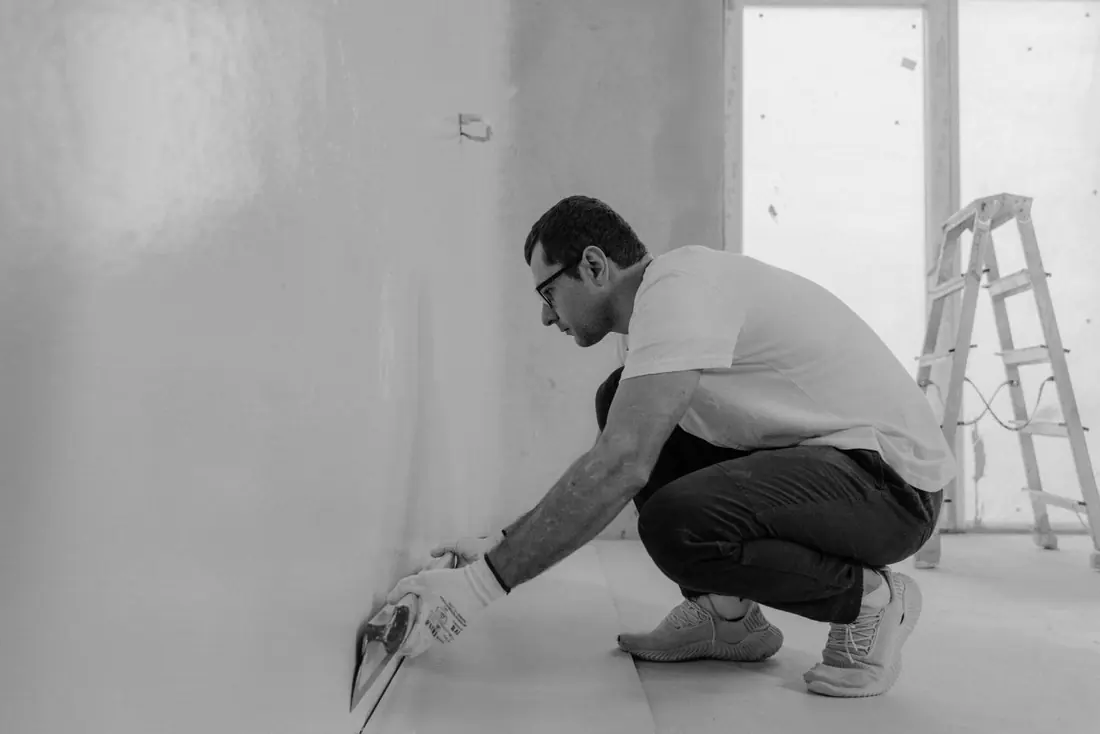 Professional training
Training description
The course provides theoretical knowledge and basic practical skills for starting painting and finishing work. Participants study working methods, quality requirements and occupational safety.
Participants practise selecting materials and tools, preparing the work area and checking quality. These foundational skills can be applied in a construction company or in independent finishing work.
As a result of the training, learners acquire the following knowledge and skills:
- can correctly determine methods for preparatory work — manual and mechanised;
- can select suitable materials according to the type of work;
- can choose appropriate tools depending on the materials used;
- prepares and fills surfaces in accordance with technical requirements;
- can assess substrate condition and choose a suitable method of preparation for painting;
- can select and apply suitable primer materials considering the base surface;
- can paint internal corners and junctions using appropriate techniques;
- follows manufacturers’ material instructions and the correct sequence of work;
- can apply roll coverings, including wallpaper and glass-fibre lining;
- distinguishes paper, vinyl and paintable wallpapers, and paints coverings designed for painting;
- knows the basic occupational health and safety requirements;
- follows environmental standards and principles of environmentally responsible work.
Learning approach and course topics
The programme focuses on basic practical painting and finishing skills. Classroom theory is applied on real construction sites, where participants examine working situations and practise appropriate techniques.
Topics include surface preparation, filling, painting, wallpapering, local and warranty repairs, and the use of decorative materials. Both manual and mechanised working methods are introduced.
Training programme
Module 01. Introduction to the basic principles of the painter profession
- Work culture and organisation of work processes
- Safety and use of personal protective equipment
- Workplace preparation and safe methods of performing work
- Personal protective equipment: workwear, safety glasses, gloves and respirators
Module 02. Quality standards, materials and tools
- Quality requirements for painting and finishing
- Methods for accepting and handing over work
- Selecting tools and equipment: filling knives, rollers, brushes, abrasives and finishing equipment
- Selection of materials: plasters, fillers, primers, enamels and paints
- Surface preparation before starting work
- Step-by-step operations in accordance with technology
- Analysis of violations of technological processes
Module 03. Planning and preparation of surfaces
- Work planning and material calculation
- Cleaning and preparing the substrate for levelling and finishing
- Plastering and levelling
- Finishing plasterboard joints
- Preparing and finishing corners and junctions
- Identifying and correcting defects
Module 04. Filling and sanding
- Filling methods: manual and mechanised
- Sanding methods: manual and mechanised
- Full-surface filling
- Detection and correction of defects
Module 05. Sanding
- Surface sanding methods
- Sanding external and internal corners
- Identifying and eliminating defects
Module 06. Working with primers and sealants
- Primer application methods
- Applying sealants to internal corners and junctions
- Sealing joints between different materials
- Identifying and eliminating defects
Module 07. Painting methods
- Selecting paints, varnishes and application equipment
- Coating application methods
- Identifying and eliminating defects
Module 08. Local repair
- Local repair methods
- Selecting materials for specific tasks
- Repairing damage and locally restoring the finish
Module 09. Applying roll coverings
- Types of roll coverings and adhesives
- Surface preparation
- Application techniques and working methods
Module 10. Independent work
- Completion of a practical assignment
- Final assessment of theoretical and practical knowledge
Theory and practice
Theory is taught in a classroom, covering materials, working methods, quality requirements and occupational safety.
Practical training takes place on real construction sites. Working situations are examined on site through demonstrations, hands-on application and checks of the completed work. The specific training location is clarified when registering.
Training materials are provided to all participants without an additional fee. Photo, video and audio files are available only by agreement with the teacher.
Completion requirements
- Attendance of at least 75% of classes.
- A grade of at least satisfactory for practical work.
- Successful completion of tests and assignments.
Issued documents
- Certificate — issued when all programme requirements are met.
- Statement — issued for partial completion of training, but not less than 50% attendance.
Employment opportunity
Successful participants may be offered work at Oresal Ehitus or a partner company. Completing the course does not guarantee employment; opportunities depend on learning outcomes and available vacancies.
Would you like to register for the next intake?
Send an enquiry to learn about admission and the course programme.